
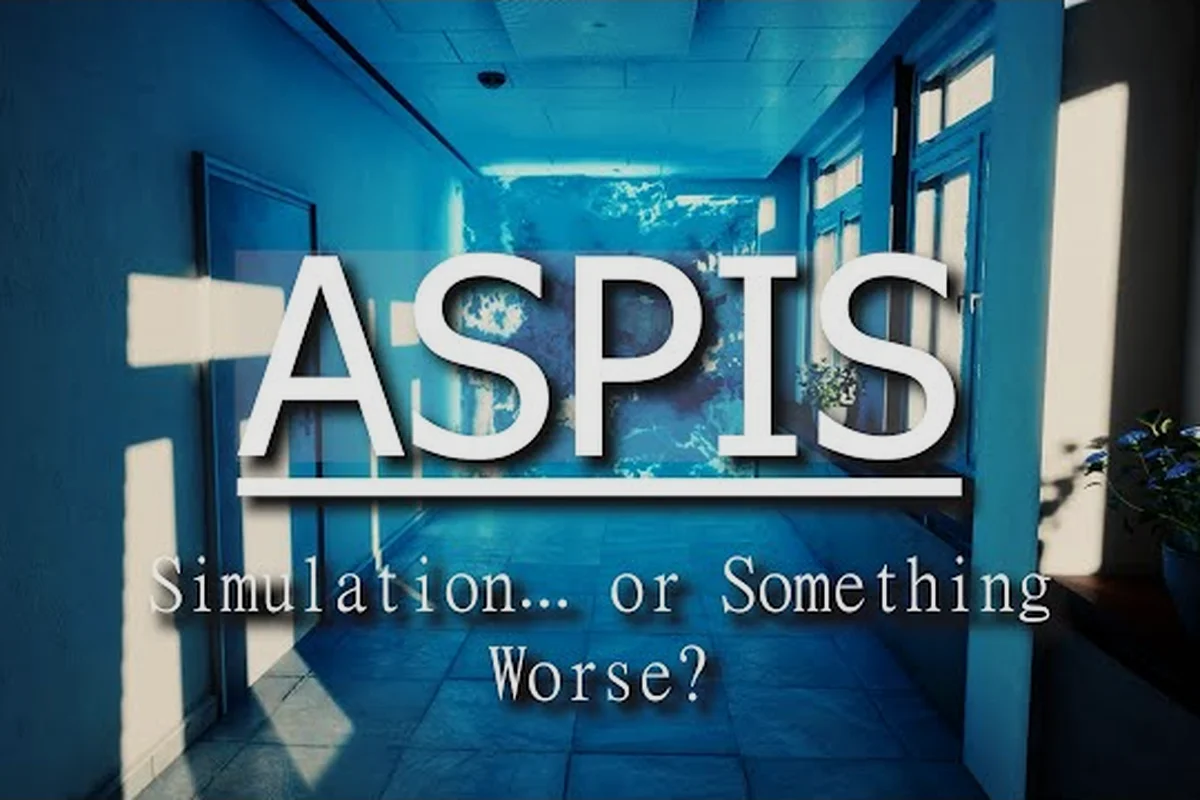
The ASPIS no hint system makes context your main resource because the institute rarely explains what to do next. Learn where documents locations appear, how audio logs connect to events, and why exploring notes and records matters: a document may preserve a route, timestamp, or recorded observation needed to understand an otherwise unexplained incident. For example, cross-checking an audio log with nearby notes and records can reveal which all documents entries are relevant, turning scattered evidence into a usable sequence instead of a set of disconnected clues.
How the ASPIS No Hint System Turns Exploration into a Puzzle
ASPIS does not publish a formal hint feature, an objective marker system, or a complete map of interactable records. Its official material describes an alternate-history institute in the USSR in 1987, where Andrey must understand a place governed by unfamiliar rules. That means the player is expected to notice details, inspect records, revisit spaces, and form deductions from what the environment provides.
The Institute of Cybernetics is therefore more than a backdrop. Its rooms, terminals, papers, and unusual objects function as a distributed puzzle. A note may identify a person, an audio log may explain a procedure, and a locked area may preserve evidence that clarifies an earlier scene. The crucial skill is not memorizing every solution, but learning which evidence deserves attention.
| Information source | What it can reveal | Best use |
|---|---|---|
| Written records | Names, procedures, institutional context | Establish who or what a clue concerns |
| Audio logs | Events, instructions, chronology | Resolve uncertainty around scenes and interactions |
| Environmental objects | Interactive mechanisms and visual anomalies | Find alternate routes or active puzzle elements |
| Dialogue and subtitles | Immediate character reactions | Confirm how the current situation changes |
| Repeated exploration | Connections between separate locations | Break dependency loops without a map marker |
Read the setting as an information system
The developer built environments from reference images of Soviet-era research sites, industrial plants and storage buildings, according to official announcements. That documentary approach rewards close observation because real workspaces contain dense layers of signage, filing systems, equipment, and personal traces. A generic-looking object may be meaningful in context, while an official-looking system may be a red herring.
A useful habit is to separate what you see from what you assume. First, identify the object, label, material, or machine in front of you. Next, record the surrounding details. Only then connect it to a person or event from notes, records, and conversations. This method prevents a plausible interpretation from becoming a false fact.
What official information does—and does not—confirm
The official ASPIS Steam page establishes the core premise, the Institute of Cybernetics, the PEP-01, Energy X, astral windows, and a setting in 1987. It does not document a hint button, a collectible checklist, named puzzle solutions, or guaranteed document locations. As a result, the most dependable approach is observation-based rather than based on an external solution chart.
Official material also does not provide a count for all documents or audio logs. A request for aspis all documents cannot be answered with a trustworthy universal percentage, because no official full-list resource has been published. What can be mapped responsibly is where different kinds of evidence tend to appear and how to recognize them in the world.
A Reliable Method for ASPIS Explore the Institute Searches
A systematic sweep of the institute is more effective than rushing between locked doors. The player’s goal is to build a working sequence: inspect what is accessible, test what can be operated, and use newly acquired evidence to decide where to return. This is especially important in the ASPIS no hint system because there is no published guarantee that every clue appears near the obstacle it solves.
Start with a room-by-room sweep rather than a corridor-by-corridor dash. Check desks, shelves, filing areas, terminals, workbenches, and objects that appear visually distinct. Open or collect records when possible, then read them before moving on. A record can alter the meaning of earlier dialogue, so postponing it may force unnecessary backtracking later.
Run a three-pass institute sweep
A three-pass routine helps separate searching from deduction. The first pass finds interactables, the second records evidence, and the third tests locations that now seem relevant. This creates a repeatable approach without requiring unpublished map coordinates or exact collectible counts.
| Pass | Primary action | Questions to ask | Result |
|---|---|---|---|
| First | Scan for interactables | What looks operational, readable, or unusual? | A list of possible evidence sources |
| Second | Collect and review records | Who is involved, and when did the event occur? | Names, context, and possible connections |
| Third | Revisit relevant spaces | Does any new record change an earlier assumption? | Testable theories and new access routes |
Keep a compact evidence ledger
The ledger does not need to reproduce every line from every record. Capture only facts that can direct action. A three-column format works well: the source, the useful fact, and the location that the fact suggests revisiting. This is especially useful for the ASPIS no hint system, where an objective is often implied rather than labeled.
-
Source: Write down the document type, terminal, speaker, or object that produced the fact.
-
Fact: Record the name, relationship, instruction, or change in circumstances.
-
Destination: Note the room, person, mechanism, or earlier scene that now deserves attention.
-
Status: Mark whether the lead was tested, unresolved, or irrelevant.
-
Uncertainty: Preserve alternate interpretations instead of rewriting the original fact.
For more support with how evidence is presented and interpreted, the guide to reading ASPIS documents can help separate useful detail from atmospheric background. In the ASPIS no hint system, an audio log may establish a person’s location without naming the current room, while a note or document may point to an object that only becomes relevant after an earlier interaction. Comparing the source, the stated fact, and the suggested destination helps you distinguish a genuine objective from descriptive scene-setting before moving through the Explore the Institute.
Search around a blocked path
When progress stops, do not assume the blocker is the only unsolved object. Explore around it. A nearby terminal might reveal the required machine state, an employee record might identify another person who carries a key, or an audio log might clarify the correct order of operations. The absence of a visible solution is often a signal to widen the search.
Use the constraint reversal technique: if one door is unavailable, list what must be true for it to open, then seek evidence for each condition. A valid condition might be possession of an item, activation of machinery, restoration of power, or information given by a specific person. If a condition cannot be connected to an observed object or action, it is probably not the right interpretation.
Where to Look for ASPIS Documents Locations and Records
Reliable document searches depend on recognizing the role of a room. An office suggests personnel files or work instructions; an archive suggests historical records; a laboratory may hold technical notes; and a terminal may expose text that was not represented as a loose paper. The game’s dense institute design gives players several document categories to work with, but the official material does not publish a comprehensive location list.
Match rooms to evidence types
| Area or object type | Plausible evidence category | What to inspect | Connection to explore |
|---|---|---|---|
| Administrator office | Personnel or administrative records | Desks, folders, cabinets, named references | Who had authority or access |
| Laboratory | Technical notes | Work surfaces, devices, terminal text | How equipment functions |
| Archive or records room | Historical documents | Shelving, boxes, document stands | Which events were preserved |
| Residential or personal area | Private notes | Bedsides, drawers, personal possessions | What happened to an individual |
| Utility or machinery room | Operational instructions | Control panels, warning labels, nearby notes | What must be powered or activated |
| Restricted office | Case files or sealed material | Locked desks, combination locks, hidden containers | What somebody wanted restricted |
These are search priorities, not confirmed room inventories. Treat them as hypotheses and compare them with what the environment actually offers. A supposed archive may contain only a terminal reference, while a personal item can reveal a document’s owner and point the search elsewhere.
Search vertically and around obstacles
Large furniture, machinery, and broken architecture can conceal small records. Look behind, beneath, and beside the object that first drew your attention. Also check raised surfaces, shelves above eye level, and openings visible from a different angle. A document seen only from a distance should be approached, because proximity often reveals an interaction prompt or confirms that it is merely scenery.
A useful exploration pattern is to describe every room in a short phrase. For example, “laboratory with powered terminal” or “office with damaged cabinet” gives you an actionable memory. These labels are also helpful in aspis documents locations searches because they describe visual features rather than relying on an unverified list of names.
Recognize records that only look like text
Some evidence may be embedded in the environment rather than presented as a standard file. Subtitles, machine displays, labels, and spoken conversations can provide the information needed for a puzzle. The advanced subtitle system built for ASPIS helps align voice, text, and scene events, which makes careful listening valuable even when subtitles are visible.
Do not discard background dialogue as flavor in ASPIS: No Hint System. Listen for repeated names, corrections, complaints about equipment, and references to places that are not currently accessible. For example, a disputed researcher name may distinguish two audio logs, while a complaint about a broken scanner can explain why a document mentions a restricted institute area. These phrases can become a bridge to the next investigation step, helping you connect the ASPIS documents locations, audio logs, notes, and records already collected instead of relying on a direct solution.
How to Use ASPIS Audio Logs Without Missing Context
Audio logs are more than optional lore. They can supply the information that documents only imply: a sequence of events, the meaning of a term, a warning about a machine, or a character’s account of an incident. In a game built around context, treating sound as evidence can make previously opaque interactions more legible.
Choose logs by information type
| Audio-log clue | Likely value | Question to carry into exploration |
|---|---|---|
| A named person | Identity or relationship | Where else does that person appear? |
| A repeated location | Destination clue | Which room resembles the description? |
| Equipment operation | Mechanism clue | Which machine or terminal matches it? |
| A complaint or contradiction | Mystery clue | Which assumption does the account undermine? |
| Mention of access or clearance | Progression clue | What authority or item is connected to that area? |
| Sound of machinery or impact | Spatial clue | What location could produce that noise? |
When reviewing an aspis audio log, separate the speaker’s claim from the confirmed fact: a frightened employee may exaggerate a pursuit, while an administrator may omit the context behind an access order. Pair the recording with aspis documents, location descriptions, and machinery or impact sounds from the log table, then test whether a named person, repeated destination, or access clearance can be independently matched. Only a claim corroborated by those details should guide your next move through the institute.
Use chronology as a puzzle layer
ASPIS’s official site says that time inside the system moves much faster than outside, and the Steam launch announcement describes the experiment as lasting longer than intended. That accelerated chronology makes conflicting accounts especially relevant. Build a simple sequence when records describe the same person or machine, but mark gaps instead of forcing a single answer.
Chronology can reveal three useful patterns: compare the timestamps attached to audio logs, all documents, and location records, then test whether the sequence reflects physical movement, system access, or a change in equipment condition. For example, if the same researcher appears in an ASPIS audio log before a note records entry to a restricted Institute area, the gap may point to an unlogged transit rather than a contradiction. Track each record’s source and time separately, because machine behavior and human testimony may not share the same clock. This makes chronology useful for turning isolated clues into a consistent timeline without assuming that every missing record represents the same kind of event.
-
Access changes: A person appears in a place before or after access was granted.
-
Equipment changes: A machine’s condition differs between two records.
-
Narrative gaps: A major event is missing because no surviving record covers it.
For broader context around recordings and the system’s mythology, see the explanation of OGAS and ASPIS lore. That background can make unfamiliar references easier to connect, although the current guide remains focused on evidence gathering.
ASPIS Notes and Records: Turning Clues into Action
The most valuable ASPIS notes and records are not those with the longest text; they are the ones that change what you do next. A useful record should provide at least one of four things: a name to seek, a place to revisit, a machine condition to test, or a contradiction that invalidates an earlier conclusion. If it does none of these, it may still provide story context, but it should not dominate your next move.
Classify each discovery by immediate use
| Record result | Immediate action | Long-term benefit |
|---|---|---|
| Names a person | Find that person or search for their records | Connects dialogue and locations |
| Names a place | Compare it with the current environment | Reveals a destination or revisit |
| Describes a process | Test its order with the related machinery | Supports a progression puzzle |
| Provides a code-like detail | Look for matching system clues | Helps identify the correct interface |
| Contradicts another source | Cross-check both claims | Prevents a false solution path |
| Adds emotional context | Revisit the associated scene | Sharpens understanding of motives |
Build hypotheses, not answer lists
A good hypothesis contains three parts: the evidence supporting it, the action it predicts, and the result that would disprove it. For example: “The terminal mentions a supervisor,” “the restricted office may require supervisory access,” and “finding that person’s sign-in record should clarify the condition.” This structure turns lore into a repeatable test.
Avoid making a record mean everything at once. A surname may identify a character, indicate a family connection, or simply appear in an old filing. Record the most direct interpretation first, then branch only when new evidence requires it. This is especially important when searching for aspis notes and records without a complete official guide.
Revisit after every meaningful branch
Return to previously inaccessible or unexplained places after major conversations, machinery changes, or story developments. The institute can reveal new interaction targets when circumstances change. Mark previous observations with a simple state label: checked, unresolved, changed, or irrelevant. This prevents redundant searching while preserving promising leads.
| Review state | Meaning | Next action |
|---|---|---|
| Checked | No useful response yet | Revisit only after new context |
| Unresolved | Evidence suggests a link | Find the missing condition |
| Changed | Object or room may react differently | Test the new state |
| Irrelevant | False lead | Leave it and return to the evidence ledger |
| Confirmed | Fact or action verified | Use it to unlock the next branch |
Practical Routes for Solving ASPIS Without External Solutions
The ASPIS no hint system rewards structured experimentation rather than exhaustive wandering. Start with the nearest understandable action, keep the evidence ledger current, and use each confirmed fact to narrow the next search. You do not need to solve every branch at once, and you do not need to collect every record before progressing.
The iterative investigation loop
-
Observe: Scan the room for readable, audible, movable, or unusual elements.
-
Collect: Gather records and preserve their useful facts in the ledger.
-
Connect: Match names, places, objects, and chronology across sources.
-
Test: Try the action suggested by the strongest hypothesis.
-
Update: Mark confirmed leads and reopen unresolved ones after changes.
This loop creates steady progress without relying on precise solution steps that official sources have not published. It also works when a puzzle involves Energy X, machinery, or astral windows. Capture and move Energy X, power relevant machinery, and use the resulting access to investigate astral windows, as described in the ASPIS puzzle guide.
Avoid common investigation mistakes
-
Do not skip text because the room looks important. Documents often redirect the search toward a less obvious place.
-
Do not treat one log as absolute truth. Compare personal accounts with official records and visible evidence.
-
Do not repeat the same failed action indefinitely. Change the relevant condition instead of pressing the same control.
-
Do not force a record into a puzzle prematurely. Story context may explain an object without providing an immediate solution.
-
Do not search only the current objective area. Side rooms can contain the clue needed to return to the main route.
Returning After a New Instruction Appears
Backtracking is most useful after gaining a new name, access condition, operational instruction, or contradiction. If a branch remains sealed, revisit your ledger and ask which condition lacks confirmation. If every condition is satisfied but the result does not change, the issue may be an incorrect interpretation rather than a missing collectible.
What the ASPIS No Hint System Reveals About Its Design
The no-hint approach is closely tied to ASPIS’s central premise: the institute is a place where ordinary rules no longer behave as expected. The official site describes ASPIS as a bridge rather than a simulation, while the store page introduces a PEP-01, Energy X, and astral windows between layers of reality. Documentation becomes another form of navigation because no single visible path can guarantee safe progress.
This design also gives sound and paper meaningful roles. The custom subtitle system aligns voice, text, and scene events, allowing players to compare what is said with what is seen. Written records can preserve institutional intent, while audio logs can preserve personal experience. Neither source is universally correct, but disagreement often marks the location of the next puzzle.
| Design element | Exploration consequence | Player response |
|---|---|---|
| No documented hint button | Problems may not state a required action | Infer conditions from evidence |
| Dense research-institute setting | Many objects resemble one another | Use contextual categories and a ledger |
| Multiple layers of reality | A route may change after system interactions | Test entrances again after major changes |
| Time moves faster inside | Event order may be surprising | Build chronology from several sources |
| One choice and two endings | Information may reshape final decisions | Record motives and unresolved claims |
This design makes the ASPIS no hint system a method of interpreting evidence rather than a demand to locate a hidden arrow. For example, an audio log may identify a witness, a note may establish an intended procedure, and a document location may contradict the institute’s apparent chronology; comparing all three can reveal a usable route. Because the multiple layers of reality and faster internal time can invalidate earlier assumptions, a practical exploration strategy is to record each document’s speaker, place, and claimed sequence, then retest entrances after major system interactions.
Frequently Asked Questions
Does ASPIS have a built-in hint system?
ASPIS does not have a documented built-in hint system. Its official store page describes exploration, terminals, Energy X, astral windows, and the Institute of Cybernetics, but it does not advertise a hint button, puzzle compass, or solution tracker. Players therefore need to read records, listen to audio logs, inspect objects, and use deduction to work through the ASPIS no hint system.
Where are the documents in ASPIS?
The official material does not publish a complete list of document locations or a verified count for all records. Documents commonly appear in institute rooms where they fit the narrative, including offices, laboratories, archives, and restricted areas, but those categories are search priorities rather than confirmed room lists. Check desks, shelves, cabinets, machines, and terminals, and update your evidence ledger whenever a new document connects to a person or place.
Are audio logs important for solving puzzles?
Yes, because ASPIS audio logs can provide procedural information, personal testimony, names, and chronology that are not visible in the surrounding room. Treat each recording as one perspective rather than an unquestionable answer. Compare it with written records, dialogue, and environmental details; contradictions often reveal which machine, person, or restricted area deserves a closer look.
How can I solve ASPIS puzzles without a solution guide?
Use a three-pass method: find every accessible interactable, review the useful evidence, then revisit locations connected to those findings. Record the source, confirmed fact, and suggested destination of each clue. This approach works especially well for the ASPIS no hint system because it turns environmental details and records into testable actions without depending on unpublished puzzle names or exact solutions.
What should I do when I cannot find a missing document?
First, check whether the record is required immediately or may simply provide context. Review the evidence ledger for a person, place, machine, or access condition connected to the blocked route. If none is apparent, widen the search around the current objective area and check alternate interaction states. Official sources do not confirm a universal document count, so an unchecked location is not automatically a missed collectible.