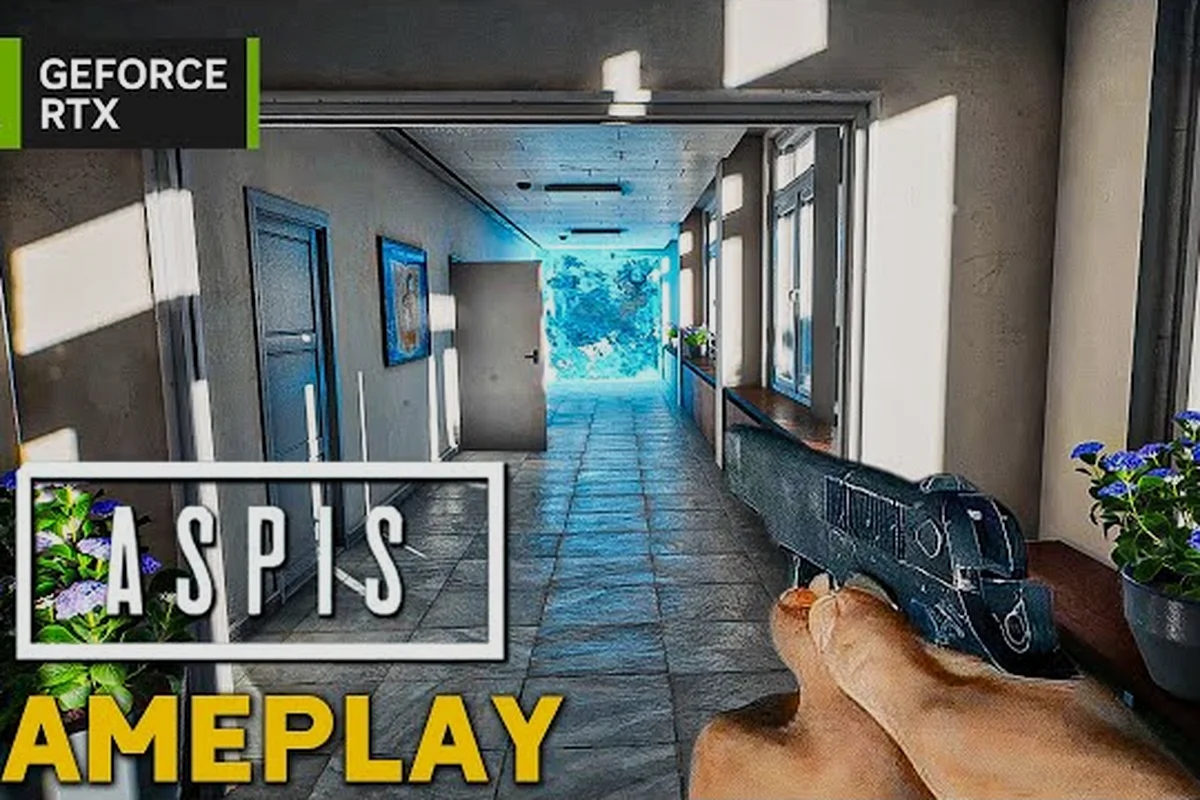
ASPIS puzzle design rests on three documented elements: Energy X, the PEP-01 device, and the astral windows that connect layers of reality. The official material describes how those systems relate but publishes no solution codes, puzzle names, or fixed sequences. This guide builds a repeatable method from that loop and marks clearly where observation has to replace a written answer.
ASPIS Puzzle Guide: Understanding the Core Systems
ASPIS puzzle guide knowledge becomes useful once you recognize that most challenges connect three systems: Energy X, machinery, and astral windows. The official materials describe a repeatable method rather than publishing fixed solutions, so the safest approach is to examine what each device needs and trace how the active layer changes. This guide explains that process without inventing codes, puzzle names, or unsupported technical values.
The game’s setting reinforces the method. ASPIS takes place in a reimagined USSR in 1987, where an engineer named Andrey explores a system whose familiar laws no longer reliably apply. Official material identifies the PEP-01 device, Energy X, and astral windows as connected parts of the exploration loop. Learning to move between layers—and testing what remains visible from each one—is the foundation for solving the game’s spatial problems.
The documented puzzle loop
| Stage | What the player observes | Practical response |
|---|---|---|
| Identify Energy X | A useful energy source appears in the environment | Determine whether it must be collected or directed |
| Interact with PEP-01 | The device responds to Energy X | Capture the available X and connect it to the device |
| Power machinery | A mechanism remains inactive or incomplete | Route the captured energy to the correct machine |
| Open an astral window | The environment reveals another layer or altered space | Compare both layers before moving through |
| Transfer the object | The solved arrangement changes what can be reached | Move the object into its new position |
This sequence is the heart of the ASPIS puzzle guide. It is not a strict checklist for every chamber, because different obstacles may reverse the order or combine several steps. Even so, the relationship remains consistent: Energy X enables a device, a device changes the space, and the changed space enables movement or access.
ASPIS Puzzle Solutions Start with Energy X
Energy X is the central resource in the ASPIS energy x puzzle, but the official store page does not publish its capacity, transfer limits, or a universal sequence. That means the dependable solution is not to memorize a number; it is to understand the relationship between the source, the PEP-01, and the machinery that consumes power. A useful strategy is to search for what the environment already frames as a circuit.
The official ASPIS page on Steam identifies the PEP-01 as a device that interacts with Energy X and opens astral windows between layers of reality. It also establishes the setting, the Makarov pistol, and a Guardian that cannot simply be shot. These details matter because not every obstacle is a combat problem: the intended response to a spatial barrier may be an energy connection rather than ammunition.
Build a location inventory
Before changing the environment, record the puzzle components visible in the room. This prevents a common mistake—trying every interactable object without understanding which elements share a purpose.
| Observation | Likely puzzle role | What to test next |
|---|---|---|
| A glowing source labeled as Energy X | Power source | Check whether PEP-01 can capture it |
| An inactive machine with a clear input | Energy consumer | Direct captured X toward the machine |
| A paired or displaced object | Transfer target | Look for a corresponding position in another layer |
| A visually identical object in a different location | Layer clue | Compare its orientation and surroundings |
| A terminal or readable record | Rule clue | Use it to identify the intended sequence |
| A Guardian blocking access | Noncombat threat | Find an environmental solution rather than firing |
Inventorying the room is also the best answer to the practical question of how to solve puzzles in this setting. Instead of assuming every glowing item is useful, ask whether it is a source, a receiver, a movable piece, or evidence about another layer. The categories are simple, but they reduce guesswork because they are based on the documented systems.
Capture before assuming
A community report may describe a particular object as a solution, but it cannot override the general rule: if the device requires Energy X, the first task is to make that energy available. Preserve your route back to the source, watch for a changed interaction prompt, and note whether the PEP-01 is still connected after the machine activates. Official announcements also note that X-spheres are captured by pressing the button rather than holding it, which is a small but useful input detail.
ASPIS PEP-01 Puzzle: Powering Machinery
The ASPIS PEP-01 puzzle is best approached as a dependency problem. The device is not a universal key; it is the bridge between stored energy and a change in reality. Before activating it, establish which machine should receive power and what the room looks like afterward. If the arrangement does not change, the issue is probably an incomplete energy link rather than a hidden button elsewhere.
The ASPIS PEP-01 guide therefore starts with observation rather than brute force. Look for visual continuity between the PEP-01, Energy X, and the target mechanism. Cables, sockets, illuminated paths, and matching surfaces can indicate intended connections, though the game does not provide a universal icon for every interaction. Follow the strongest visual relationship, then compare the result with the physical arrangement around the window.
A reliable activation method
-
Survey the complete room before collecting or moving anything.
-
Mark the Energy X source and identify every powered device in view.
-
Capture X with the PEP-01 and check whether the device now displays a new active state.
-
Test the intended machine rather than every nearby interactable.
-
Compare the space before and after activation, focusing on displaced objects and newly accessible routes.
-
Record the result so a later layer puzzle can reuse the same principle.
The official Steam announcements clarify that Energy X is captured with a button press, but they do not reveal capacities, recharge rules, or cooldowns. This distinction matters: an ASPIS puzzle solution should be based on what the player can see and change, not on unconfirmed numbers circulating elsewhere. A focused search guide for capturing X-spheres can help with the collection step, while the remaining work is to understand what the energy unlocks.
Diagnose a stalled puzzle
| Symptom | More likely interpretation | Check |
|---|---|---|
| PEP-01 shows no usable Energy X | The source was not captured or the device was not connected | Return to the source and interact again |
| Machine remains inactive | The intended receiver is uncertain | Compare every powered object in the room |
| Machinery activates, but nothing opens | The powered function is only part of the solution | Inspect the room for a newly altered element |
| Astral window opens to an unexpected layout | One layer is only part of the puzzle | Compare positions across both layers |
| An object cannot be moved | Its destination may exist in another layer | Open or use the corresponding window first |
This diagnostic table helps separate energy failure, spatial failure, and movement failure. Treating all three as one “locked door” problem often creates needless backtracking. In an ASPIS how to solve puzzles workflow, the fastest correction is usually the one that matches the visible symptom rather than the one that involves searching the whole area again.
ASPIS How to Solve Puzzles Across Different Layers
Astral windows make ASPIS a spatial puzzle game, and comparison is the most reliable solution method. When a window opens, the two spaces may share a visual theme while presenting different objects, paths, or working machinery. The answer frequently lies in the difference between them rather than in a hidden object inside either room.
An effective approach is to treat each layer as a diagram. Record what stands in the same relative position, what has moved, and what seems to lack a counterpart. If a block appears in one layer but not the other, its destination may be the empty position. If two versions of an object sit in different spots, determine which arrangement matches the machine or pathway.
Compare the layer pair method
| Area to inspect | First layer | Second layer | Reasoning value |
|---|---|---|---|
| Floor footprint | Note occupied and empty positions | Compare corresponding spaces | Reveals potential transfer slots |
| Tall objects | Record height and orientation | Look for a matching outline | Identifies movable pieces |
| Machinery | Check powered versus inactive states | Compare visible energy cues | Shows which layer supplies power |
| Routes | Mark blocked and open paths | Compare the route after activation | Exposes the intended sequence |
| Scale cues | Look for walls, rails, or fixed edges | Check whether positions still correspond | Helps detect altered geometry |
This is where the ASPIS puzzle solutions become repeatable. A player does not need an official answer key; they need a stable frame of reference. Take a mental photograph before crossing, then identify the smallest object that can plausibly be moved. Large environmental features usually anchor the layout, while a small displaced object often carries the key.
For a deeper look at related spatial mechanics, the ASPIS object transfer puzzle focuses on activating machinery and placing items correctly. Keep the two activities separate: first create the access, then move the object. Combining them too early can make the room appear inconsistent.
ASPIS PEP-01 How to Use: Control the Order of Operations
Learning how to use the PEP-01 effectively means separating preparation, activation, and verification. Preparation identifies the available energy and target machinery. Activation captures Energy X and powers that machinery. Verification checks whether the room changed in a way that supports the next action. The sequence is simple enough to remember because it mirrors the official description without pretending to reveal unpublished puzzle answers.
A useful habit is to describe each intended action as a complete sentence: “I need to move X from the source to the machine,” or “I need to place the block in the empty position.” This helps when the solution depends on object transfer rather than combat. It also prevents accidental activation of an unrelated device. If the description requires “after,” the puzzle probably expects a sequence; if it requires “across,” inspect the layer difference.
Pre-action checklist
-
Energy source: Confirm that the relevant X is present and reachable.
-
PEP-01 state: Check whether the device is empty, charged, or already linked.
-
Machine target: Choose the mechanism that visibly depends on energy.
-
Layer context: Determine whether the machine operates on the current layer or opens access to another.
-
Object state: Note where movable pieces begin and where comparable empty positions appear.
-
Environmental clues: Read nearby records or inspect markings before leaving the room.
Official material does not publish a complete PEP-01 instruction manual, energy capacity, or a list of puzzle codes. That absence is important for anyone seeking the ASPIS pep-01 how to use procedure. The game’s stated system supports a general method, while the precise answer must come from the room’s own arrangement. If a guide claims one universal sequence for every chamber, treat that claim cautiously unless it includes observable evidence from the current environment.
| Puzzle state | What likely matters most | Recommended next action |
|---|---|---|
| Energy X is visible but unused | Source connection | Bring PEP-01 into interaction range |
| Energy X is captured but the machine is idle | Receiver selection | Recheck which machine has an active input |
| Machine is active but a window is closed | Layer order | Inspect machinery outputs and nearby objects |
| Window is open but an object will not move | Destination mismatch | Compare corresponding positions across layers |
| Solution seems complete | Verification | Check routes, sightlines, and changed machinery |
ASPIS Puzzle Guide: Avoiding Common Dead Ends
Most frustrating sequences in ASPIS come from skipping verification. A player may collect the right resource, power a machine, and still expect a door to open. But the room may require one more action: transferring an object, comparing layers, or using a mechanism revealed by the newly powered state. The puzzle does not have to announce every dependency, so a short check after each change can prevent long backtracks.
The second common dead end is treating the Guardian as a conventional shooting problem. The official store description says the Guardian cannot simply be shot, which makes it a reminder to read the environment. Even though the player also carries a Makarov pistol and can use melee combat, ammunition is not a universal answer to every obstacle. Spatial logic should remain the first hypothesis when the block is architectural or changes between layers.
Fix mistakes without restarting
| Mistake | Recovery action | Result |
|---|---|---|
| Activated the wrong machine | Revisit the room and compare all power-dependent objects | Identify the intended receiver |
| Missed an X source | Search side rooms and the opposite layer | Restore an otherwise incomplete energy chain |
| Moved an object too early | Recall its starting position, then reproduce the active state | Test the correct layer relationship |
| Forgot a readable clue | Review nearby records and audio context | Recover the intended rule or sequence |
| Assumed a combat answer | Look around for machinery, geometry, or a window | Shift from damage to spatial logic |
The ASPIS locked door guide can help when progress is blocked by an entrance, but the same principle applies inside completed rooms: distinguish access from interaction. A door may require a machine to run, an object to be transferred, or a window to expose a path. Treating every barrier as a key hunt removes the logic from the challenge.
A short observation log is especially useful. Record the room, the visible X, the powered machine, the changed object, and the portal state. That simple history helps distinguish a failed attempt from a partially successful one, and it makes later ASPIS puzzle solutions more deliberate.
Building a Complete Problem-Solving Routine
A consistent routine matters because ASPIS puzzles often separate cause and effect across spaces. The following sequence turns visual uncertainty into manageable questions: classify the obstacle, power what needs power, compare the layers, transfer what is out of place, and verify the new route. It works for the Energy X loop, but it also applies to combination-style devices, environmental barriers, and object arrangements.
| Step | Core question | Evidence to record |
|---|---|---|
| Classify | What kind of obstruction is this? | Energy, machinery, door, object, or layer mismatch |
| Source | Where is the required power? | Location and state of Energy X |
| Activate | Which machine should change? | Device response and newly lit elements |
| Compare | What differs between layers? | Position, orientation, and access changes |
| Transfer | What belongs somewhere else? | Current and corresponding positions |
| Verify | Did the room actually change? | New route, window, or machine state |
The six-step routine reduces the chance of missing a visible clue. It also keeps the player from repeating the same interaction. After every activation, spend a moment comparing before and after. If nothing changed, revisit the assumption that was wrong rather than scanning randomly for a secret control.
Official achievement text provides additional examples of spatial objectives: one concerns unpacking an empty container with a packing machine, another refers to breaking the Devil’s cage, and another places a freed prisoner at the edge of the island. These achievements confirm that machines, movable objects, and layer positions matter across the broader game, even though they do not provide a universal formula.
Frequently Asked Questions
What is the main method for solving ASPIS puzzles?
The most dependable method is to identify the required system, prepare its input, and verify the resulting change. For Energy X puzzles, capture the resource with the PEP-01, power the relevant machinery, and check whether an astral window or object position has changed. Official materials describe this general loop, but they do not publish a complete puzzle-by-puzzle answer list.
Can Energy X be moved between different objects?
Treat Energy X as a power source rather than a permanent property of the room. The documented mechanic allows the PEP-01 to interact with it, but official information does not publish capacities, transfer limits, or universal instructions for every machine. Observe which device receives the energy, test it, and use the resulting environmental change to determine the intended route.
What should I do when an astral window opens?
Compare the new space with the area you just left. Look for empty floor positions, displaced objects, inactive machinery, and paths that appear only after activation. The key object may need to move between corresponding positions, or a machine may need to run before the route becomes usable. Record the differences before crossing so you can recognize what the window changed.
Is the Guardian a puzzle that should be solved with the Makarov pistol?
No. Official material specifically says the Guardian cannot simply be shot, so the direct combat answer is not a complete solution. Look for environmental controls, spatial routes, machinery, or astral windows that alter the encounter. The Makarov pistol and melee combat are part of the game, but they are not the universal answer to every obstacle.
Where can I find exact PEP-01 puzzle solutions?
Exact solutions are not published as codes, named puzzles, or a universal sequence in the official ASPIS material. The reliable route is observation: capture Energy X, test the relevant machinery, compare the two layers, and move objects according to their visible correspondence. If you need a broader process, use this ASPIS puzzle guide alongside the dedicated PEP-01 reference to record each state change.
The core takeaway is simple: ASPIS puzzles become tractable when you treat Energy X, powered machinery, astral windows, and object placement as one connected system. Capture energy deliberately, activate what visibly needs it, compare both layers, and let each confirmed change determine the next step. That process is more reliable than memorizing unverified answers, and it remains effective even when the room changes around you.