
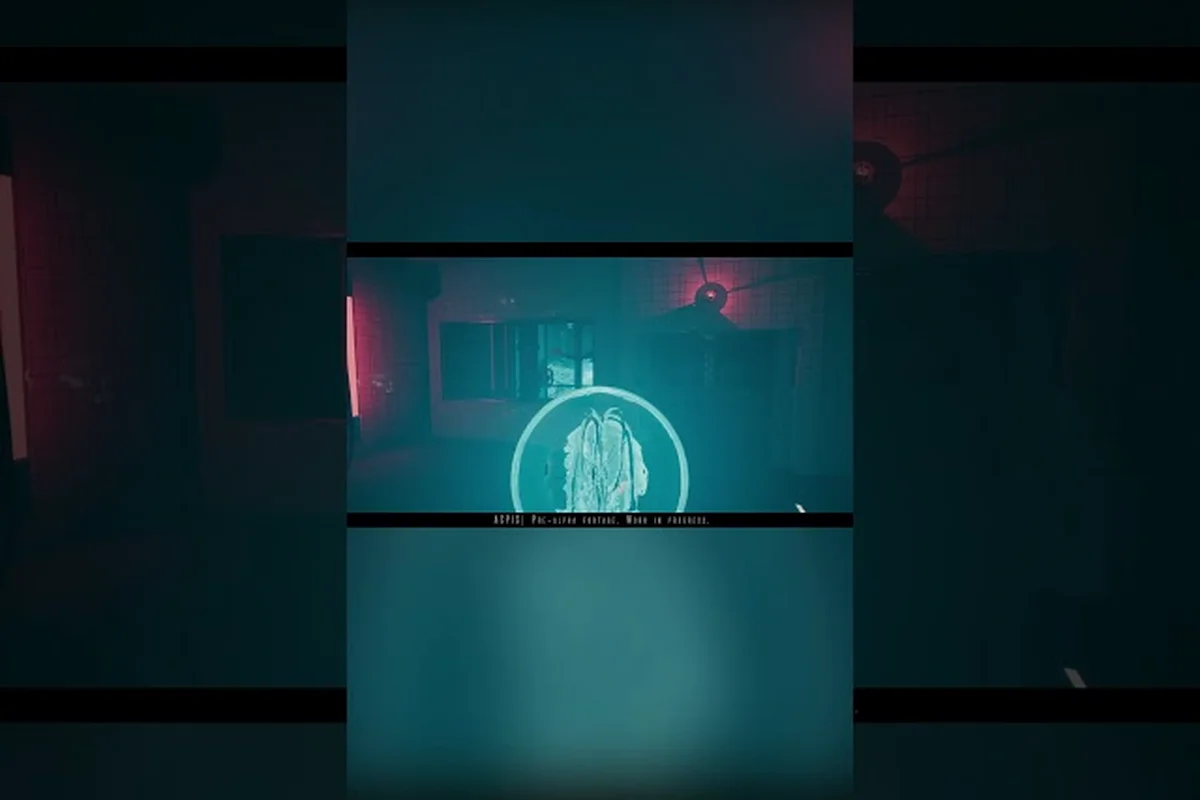
ASPIS patch notes matter because they reveal what changed between the 2025 demo and the October 23, 2026 release, separating build-specific improvements from changes confirmed for launch. Tracking the version history—while noting that the developer has not published a separately numbered day-one patch or any confirmed subsequent hotfix—clarifies which bug fixes were actually verified, whether launch timing affected availability, and which demo features may not appear in the full game.
ASPIS Patch Notes: Demo Changes and Full-Version Launch
The official ASPIS patch history is split between the 2025 demo and the October 23, 2026 launch on Steam and VK Play. Dream Wire Games has published nine Steam announcements, but it has not released numbered build identifiers, so the clearest way to review the ASPIS latest update is by following the documented demo adjustments, launch announcements, and individual bug fixes.
Demo Patches: FOV, Mouse Axes, and Pause
The demo received the most concrete set of technical updates, with changes spanning the 120-degree field of view, independent X-axis and Y-axis mouse inversion, functional pause behavior, on-screen task text, episode selection, flashlight brightness, the circular equipment menu, press-based X-sphere capture, and seven text localizations. These notes are especially useful for distinguishing problems addressed before launch from improvements that were actually present in the final ASPIS release. For example, the press-based X-sphere capture and functional pause were clear control and usability fixes in the demo, while the wider field of view and adjusted flashlight brightness directly affected visibility. Consulting them when researching ASPIS version history can prevent a pre-release build change from being mistaken for a confirmed day-one patch or latest update, particularly because the official feed does not provide conventional version numbers or date-stamped build labels.
| Documented change | Practical effect |
|---|---|
| Maximum field of view increased to 120 degrees | Players can use a wider visible field within the demo |
| X-axis and Y-axis mouse inversion separated | Horizontal and vertical inversion can be configured independently |
| Pause changed to actually stop the game | The pause state behaves as players expect during testing |
| New task text displayed on screen | Objectives are shown more directly during play |
| Episode selection added | Players can select the starting point from the available demo episodes |
| Brightness of the flashlight adjusted | The illumination setting was tuned for better visibility |
| Equipment selection changed to a circular menu | Choosing equipment uses a more compact interface |
| X-sphere capture changed from holding to pressing | Capturing an X-sphere now uses a direct button press |
| Seven text localizations added | The demo gained additional language support |
These changes came across separate demo announcements rather than one consolidated list. That distinction matters when researching ASPIS version history, because the official feed does not identify each adjustment with a conventional version number or date-stamped build label. For example, the press-based X-sphere capture appears alongside the functional pause and the 120-degree field-of-view adjustment, yet the announcements do not establish that all three shipped in the same pre-release build. Researchers should therefore treat each demo update as a separately documented change, classify it as a pre-release modification, and avoid presenting it as an ASPIS day one patch or ASPIS latest update without stronger build evidence.
Demo Features Versus Launch Content
Some documented changes concerned presentation and usability, while others altered interaction or settings. The distinction matters when reading ASPIS patch notes: the circular equipment menu, 120-degree field of view, and flashlight brightness affect how the Institute of Cybernetics is presented, whereas X-sphere press input, separate mouse inversion, and the pause fix change simulation handling. The table below separates those categories and identifies whether each note belonged to the 2025 demo or the full version launch.
| Update type | Examples | Published scope |
|---|---|---|
| Interface adjustment | Circular equipment menu, on-screen task text | 2025 demo |
| Control adjustment | X-sphere press input, separate mouse inversion | 2025 demo |
| Visual adjustment | Flashlight brightness, 120-degree field of view | 2025 demo |
| Functional correction | Pause now stops the simulation | 2025 demo |
| Content selection | Episode selection | 2025 demo |
| Localization | Seven demo text localizations | 2025 demo |
| Release information | Steam and VK Play availability | Full version launch |
The demo’s localization count should not be treated as the final language list for ASPIS. The 2025 demo announcement cited seven text localizations, but the official store page lists only English, Russian, French, Ukrainian, and Japanese for the finished game. This difference matters when reviewing ASPIS patch notes: a localization entry recorded for the demo may describe provisional text support rather than the languages available at the full version launch.
The earlier demo was an extended prologue offering up to two hours of gameplay. It introduced the Institute of Cybernetics and the story premise before the full game. Players looking for that background can use the ASPIS demo history and availability details to separate the original preview from the commercial release.
What the Official Record Does Not Include
A complete version history would normally list build numbers, release dates, every altered file, and fixes tied to each patch. Dream Wire Games’ public announcements do not follow that format. The official feed records changes, announcements, and corrections, but it does not publish a formal build sequence or a full changelog for every release.
That absence matters for the ASPIS day one patch in particular because no separately numbered launch patch appears in Dream Wire Games’ available official material. Instead, the launch-related announcements and accumulated demo corrections function as the practical ASPIS patch notes record, documenting changes through individual update posts rather than a consolidated changelog. For example, players seeking the latest update or bug fixes would need to trace those named corrections across the official feed instead of filtering results by a formal patch number.
| Expected changelog item | Available official evidence |
|---|---|
| Numbered launch build | Not published |
| Detailed file-by-file changes | Not published |
| Separate day-one patch label | Not published |
| Named bug corrections | Published in announcement form |
| Demo technical adjustments | Published across demo updates |
| Release date and platforms | Published on the official store page |
This means the absence of a numbered build is a documentation gap, not proof that no code changed between the demo and launch. It simply means players cannot map every reported symptom to a formal patch number using the current official feed.
ASPIS Release Date, Time, and Platform Details
The official ASPIS release date is October 23, 2026, with the full game launching on Steam and VK Play. For patch-note tracking, this date is the key cutoff: builds made before launch may still be demo, festival, or pre-release versions, while the October 23, 2026 launch build is the only observable baseline for the full game, because the developer has not published a separately numbered day-one patch. When checking the ASPIS version history, compare the launch build against later official announcements for launch-period issues, balance adjustments, and version-specific changes rather than assuming every earlier update applies to the released version.
Confirmed Release Information
The official ASPIS store page on Steam names Dream Wire Games as both developer and publisher and gives October 23, 2026 as the release date. It also identifies the game’s setting as the USSR in 1987 within an alternate history.
| Release detail | Confirmed information |
|---|---|
| ASPIS release date | October 23, 2026 |
| Available platforms | Steam and VK Play |
| Developer | Dream Wire Games |
| Publisher | Dream Wire Games |
| Setting | USSR, 1987 |
| Full-version languages | English, Russian, French, Ukrainian, Japanese |
| Announced release time | Not specified in official material |
| Console release | Not announced |
What Is Known About the ASPIS Release Time?
The store page confirms the calendar date, while the available official announcements do not provide a dependable hour or minute for the ASPIS release time. Regional storefront clocks, platform maintenance, and regional payment processing can make a fixed global time especially unhelpful.
Players should therefore distinguish two different questions. What day did ASPIS release? The answer is October 23, 2026. At what exact time did it become available? The official sources reviewed here do not publish a universal hour, so any more precise claim should be treated as a platform-specific observation rather than an official release schedule.
Launch Context
The October launch was described as the culmination of nearly six years of development. ASPIS follows Andrey, an engineer whose deceased wife is Anna and whose daughter is Liza. Six volunteers are connected to an experiment involving the PEP-01, Energy X, and astral windows that connect different layers of reality.
The story premise is not a patch feature, but it explains why the final release matters to players who encountered the earlier demo. The demo covered an extended prologue, while the commercial game presents the broader story and its promised branching conclusion. A final choice leads to two endings, according to the official store description.
The full release also expands the documented play materials. Andrey can use a Makarov pistol or melee combat, and ammunition and other resources can be found while exploring. A Guardian appears in the threat set, although the official description makes clear that it cannot simply be defeated by shooting. These details are useful for evaluating launch reports about encounters or equipment without inventing systems that the developer has not documented.
Important Naming Detail
ASPIS stands for Autonomous System for Predicting Historical Events. Understanding the full name does not reveal a hidden patch history, but it is useful when searching announcement archives because “ASPIS,” “Aspis,” and the expanded title can lead to different search results. The official Steam announcement feed remains the primary record.
Players seeking release news outside the patch feed can also consult Dream Wire Games’ ASPIS updates and launch background. That broader context helps explain the development timeline without substituting speculation for the official changelog.
ASPIS Bug Fixes and Technical Adjustments
The clearest documented ASPIS bug fixes concern pausing, flashlight brightness, and X-sphere capture. These are specific interface or interaction corrections rather than balance changes, so they address execution consistency in the X-sphere encounter without introducing numeric balance adjustments. In the aspis patch notes history, the absence of attached gameplay values matters: it distinguishes fixes that restore intended controls and capture behavior from changes to damage, enemy behavior, progression, or other tuned systems.
Confirmed Fixes and Improvements
| Recorded item | What the developer changed |
|---|---|
| Pause behavior | The game now actually pauses when the pause option is used |
| Flashlight presentation | Brightness was adjusted |
| X-sphere input | Capture now uses a button press rather than holding the control |
| Equipment interface | Equipment selection moved to a circular menu |
| Task visibility | New task text is displayed during gameplay |
| Mouse controls | X-axis and Y-axis inversion became separate options |
| Field of view | The demo’s maximum field of view was raised to 120 degrees |
These are the strongest entries available for an ASPIS latest update roundup because each describes a visible change. However, they are not a complete list of every internal correction made during nearly six years of development. Patch notes usually exclude minor code changes that do not alter the player-facing experience, and ASPIS’s public announcements do not provide a file-level audit trail.
How to Interpret the Fixes
The pause correction is easy to understand: a control labeled pause previously failed to provide the expected result, so the developer changed its behavior. The flashlight adjustment altered visibility, while the X-sphere change made the capture action less dependent on sustained input. The remaining notes improved navigation, task communication, or control flexibility.
Because official material does not publish damage values, enemy health, ammunition capacity, or other balance figures, the available notes should not be expanded into a speculative balance framework. There is also no verified basis for claiming that a patch altered progression, difficulty, or the number of chapters. Such claims would go beyond the developer’s announcements.
| Change category | Confirmed example | What is not confirmed |
|---|---|---|
| Input | Press instead of hold for X-sphere capture | Controller remapping details |
| Pause | Pause now stops the game | Save rules around pausing |
| Visibility | Flashlight brightness adjusted | New stealth parameters |
| Menu | Circular equipment selector | Expanded inventory mechanics |
| Display | Task text shown on screen | New quest-marker system |
| View | 120-degree maximum in the demo | Difficulty tied to field of view |
If a launch-day problem involves a crash, missing display, or control failure, it should be recorded separately from the confirmed historical notes. The ASPIS known-issues reference provides a focused place to organize launch troubleshooting information without pretending that an unnumbered issue was part of the official patch history.
What Player Reports Can Add
Community reports can reveal problems after a build reaches real hardware, but they are not substitutes for developer confirmation. According to community data, performance, crashes, save behavior, and achievement activation may vary by hardware or platform version. Those claims should be dated and attributed rather than inserted into the official changelog as facts.
A responsible report records several details: the affected build number, the date and time observed, the Aspis version or launch build involved, the hardware configuration, and any reproducible steps. For example, a crash during a save attempt should note whether it happened before or after progress was written, while an achievement-activation failure should identify the exact trigger sequence. These observations are especially valuable when comparing an Aspis patch note with the latest update, because they can show whether a reported issue remains in the current version history or was fixed in a later bug-fixes release.
-
The platform and region used.
-
Whether the issue occurred in the demo or full version.
-
The approximate point in the session when it appeared.
-
Whether restarting or changing settings resolved it.
-
The exact build information shown by the platform, if available.
This approach preserves the distinction between an official note and a player-observed problem. It also makes future comparisons more useful if Dream Wire Games adds labeled builds or begins publishing numbered hotfixes: readers could then map an Aspis version-history entry or a separately labeled day-one patch to a specific community report, rather than treating every observed crash or achievement failure as a confirmed change. If a later Aspis latest update lists the issue under bug fixes, the report provides traceable evidence for when the problem may have been resolved.
Day One Checks for the ASPIS Latest Update
Checking launch-day behavior starts with preserving the platform’s displayed build information and testing the areas previously corrected. A practical launch check can confirm whether a documented fix remains present without assuming that every fresh installation is identical.
Recommended Verification Sequence
| Order | Check | Reason |
|---|---|---|
| 1 | Record the platform and displayed build | Establishes the tested version |
| 2 | Start the game and test the pause control | Verifies a prior functional correction |
| 3 | Compare flashlight visibility | Checks the documented brightness adjustment |
| 4 | Open the equipment selector | Confirms the circular interface remains available |
| 5 | Test X-sphere capture input | Checks the press interaction |
| 6 | Review task text on screen | Confirms the improved objective display |
| 7 | Adjust X and Y mouse inversion | Verifies independent control options |
| 8 | Check achievements separately | Avoids confusing unlocks with broader launch issues |
The 120-degree field of view and episode selection were documented specifically for the demo, so they are useful historical comparison points but not automatic proof of additional full-version features. Likewise, the demo’s seven localizations should not replace the store page’s five-language list for the finished product.
Identifying a Real Day-One Correction
Suppose the pause control still allows the scene to continue, or the flashlight display differs from the adjustment described in the demo announcement. That may indicate a regression, a later intentional redesign, or a platform-specific issue. A single observation does not prove which explanation is correct, so the best next step is to document the exact behavior and compare it with the official version history.
A useful report separates appearance from function. “The flashlight looks darker” is subjective, while “the circular equipment menu is absent and the documented interface is not shown” is directly comparable with an official note. The second description helps a developer reproduce and classify the issue without requiring a guess about balance or hardware performance.
Checking for Silent Corrections
Some corrections may not receive their own announcement. A patch can change startup behavior, text rendering, save recovery, or platform integration without receiving a highlighted Steam post. This is why the official feed is the best starting point but not necessarily a complete diagnostic record for every installation.
The day-one-patch question should also be understood as an unpublished label rather than a specific package. No official material calls a particular file the “day one patch,” so players should avoid treating unofficial build identifiers as confirmed release labels. The safe method is to document what the platform reports, test known areas, and retain the date and platform alongside the observed result.
Players who completed the demo may also want to compare its structure with the commercial release. The ASPIS story and project background provides context on the experiment, the six volunteers, and the 1987 setting, which can make progression-related observations more precise.
Reading the ASPIS Version History Without Missing Context
A useful ASPIS version history combines dated announcements with clearly labeled scopes. Because ASPIS uses announcement posts rather than numbered public builds, a chronological table offers the most accurate representation of the available record. Each row should separate the announcement date from the effective ASPIS release date or release time when known, and distinguish launch-period observations from later hotfixes. This distinction matters when comparing ASPIS bug fixes with the latest update: a later post may describe the newest status without changing the date on which a fix first shipped. Scope labels—such as gameplay balance, progression, items, or technical corrections—also prevent an early adjustment from being mistaken for a full version release, while preserving the available evidence where ASPIS provides no formal build number.
Announcement-Based Timeline
| Period | Record | Main significance |
|---|---|---|
| 2025 demo period | Extended prologue released | Provided up to two hours of gameplay and introduced the premise |
| Early demo period | Technical-update announcements | Adjusted field of view, mouse inversion, pause, and task display |
| Later demo period | Interaction and interface changes | Revised X-sphere capture, flashlight brightness, and equipment selection |
| Demo language period | Localization update | Added seven text localizations for the demo |
| 2026 release period | Launch announcement | Set October 23, 2026 for Steam and VK Play |
| 2026 release period | Store information | Confirmed developer, publisher, languages, setting, and core premise |
This structure shows why an ASPis release date should be treated as a specific milestone rather than the beginning of every update associated with the project. The demo generated many technical notes, but the final release arrived nearly a year later.
What Counts as an Official Entry?
An official entry must come from Dream Wire Games’ verified channels or an official store listing. The nine Steam announcements qualify, as does the current store page. Player summaries, videos, and social posts can supplement that record, but they should be labeled as community reports or channel-specific observations unless the developer has confirmed the same information.
| Source type | Authority for this topic | Appropriate use |
|---|---|---|
| Official Steam announcements | Highest | Dated changes and release announcements |
| Official Steam store page | Highest | Release date, platforms, languages, premise |
| Official launch trailer | Supporting | Visual context and confirmed campaign framing |
| Player reports | Supporting | Newly observed problems or platform behavior |
| Unverified build labels | Limited | Clues only, never official version history |
The official launch trailer from Dream Wire Games presents the game’s story and atmosphere, while the Steam announcements provide the clearer record of updates. Video footage can show presentation changes, but it cannot substitute for written confirmation when a note concerns control behavior or technical settings.
Known Limits of the Record
Dream Wire Games has not published a DLC roadmap, sequel schedule, console release plan, or post-launch content calendar in the available official material. Nor has the developer provided a detailed numbered changelog for the full game. It would therefore be inaccurate to promise future features, assign a console date, or describe an unreleased update as a confirmed ASPIS latest update.
The same restraint applies to development systems. Official material does not document crafting, skill trees, experience levels, perks, shops, currency, loot, New Game+, multiplayer, photo mode, mods, fast travel, or a map-and-quest-marker system. A patch-notes article should not manufacture these features to fill space or imply that their absence from the notes proves they exist in the game.
A Practical Archiving Method
Players, creators, and guide writers can preserve the history in a simple, auditable format. Save the announcement title, date, official URL, affected scope, and a short factual summary. Label every item as demo, full version, or unspecified. Avoid copying promotional language and preserve the distinction between confirmed settings and player impressions.
A sound entry looks like this: “Demo update: pause behavior corrected.” A less sound entry would call the same note a global full-game overhaul or claim that it changed difficulty. Accurate categorization keeps the ASPIS patch notes useful long after a particular news page stops appearing in the store’s latest announcements.
Frequently Asked Questions
When did ASPIS release?
ASPIS released on October 23, 2026, according to the official Steam store page. The full game launched on Steam and VK Play, with Dream Wire Games serving as developer and publisher. The available official materials do not specify a universal launch hour, so any exact release-time claim should be treated as platform-specific rather than official.
Is there an official ASPIS day one patch?
The available official announcements do not label a separate numbered day-one patch. Players can instead review the documented demo corrections, release announcements, and current platform build information. The confirmed historical notes include changes to pause behavior, flashlight brightness, X-sphere capture, the equipment menu, task text, mouse inversion, and the demo field of view.
Where can I find the official ASPIS version history?
The official Steam announcement feed is the primary source for the ASPIS version history, while the store page supplies launch details and supported languages. Dream Wire Games has published nine announcements, but not a conventional build-number sequence. This means the most accurate approach is a dated announcement timeline rather than an assumed list of version numbers.
What bug fixes were documented for ASPIS?
The clearest official fixes concern the pause control, flashlight brightness, and X-sphere capture, which now uses a press rather than a hold. Other documented improvements include a circular equipment selector, on-screen task text, independent X and Y mouse inversion, and a 120-degree maximum field of view in the demo.
Did the 2025 demo and full game have the same languages?
No. The demo update added seven text localizations, but that count did not represent the finished game’s language support. The official store page lists English, Russian, French, Ukrainian, and Japanese for the full release, so demo localization records should be interpreted only in their original context.
In summary, the verifiable ASPIS patch notes center on the 2025 demo’s technical corrections and the October 23, 2026 release announcement. Because Dream Wire Games has not published numbered builds, the official announcement feed remains the most reliable record of ASPIS latest update details, documented bug fixes, and the boundaries between demo features and full-game content.