
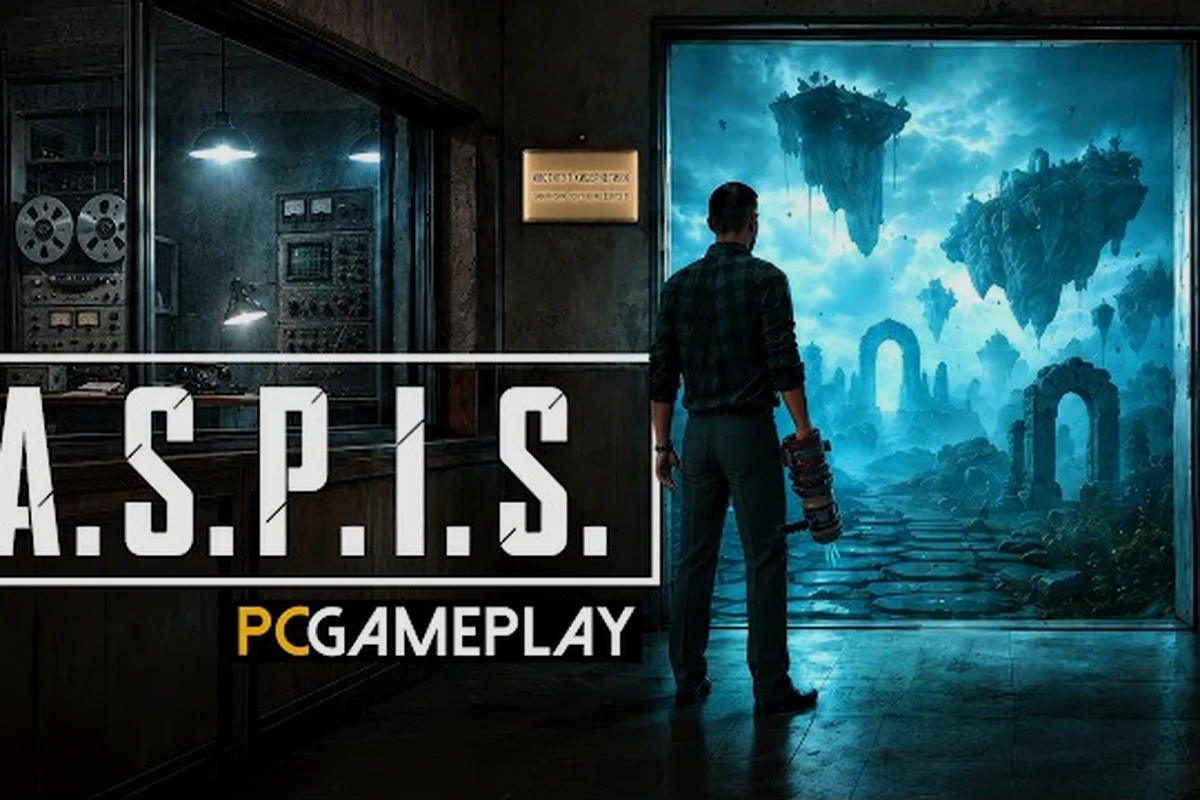
With ASPIS ammo shortage, every trigger pull can consume a Makarov round that may never be replaced, so sightlines, reload timing, and target priority become as important as aim. If a hostile cannot be killed with the remaining ammunition, a Makarov shot may only create a brief opening for escape; melee becomes the safer option when it breaks contact without wasting scarce rounds, while unkillable enemies require immediate disengagement rather than a prolonged firefight.
Understanding the ASPIS Ammo Shortage
The official ASPIS store page lists a Makarov pistol, melee combat, and resources that must be discovered while exploring. Those three details establish the core problem: a firearm is useful, but ammunition is not guaranteed, and some threats cannot be solved by firing alone.
That makes the aspis ammo shortage more than a resource problem. It is a decision problem. Every encounter has at least three possible answers: spend a round, use the weapon in your hands without firing, or avoid the enemy entirely. A sound plan chooses among those options before tension turns the situation into a scramble.
The official description also states that a Guardian cannot simply be shot. This does not mean that every enemy is invulnerable, nor does it establish the behavior of ordinary enemies. It means that players should not assume more bullets are always the best answer.
| Encounter type | Best first response | Why it works |
|---|---|---|
| Ordinary threat in open space | Create distance, then assess | Preserves ammunition and reveals whether shooting is necessary |
| Ordinary threat blocking a route | Look for another passage | Avoids paying for a fight that has no required reward |
| Guardian | Disengage and break line of sight | The official material says it cannot simply be shot |
| Close-range emergency | Use melee if the opening is safe | Saves ammunition when a shot would be wasteful or too late |
| Last round in a corridor | Retreat before committing | Prevents the encounter from becoming unwinnable |
This decision framework is more reliable than memorizing a rigid sequence. ASPIS does not publish damage, health, stamina, ammunition capacity, or enemy-count values, so advice based on exact numbers would be false precision. Instead, use observable conditions: distance, cover, pursuit pressure, available exits, and the enemy’s resistance to gunfire.
For broader information about the pistol, resources, and equipment management, consult the ASPIS ammo and resources overview. Within the aspis ammo shortage, a practical combat response means deciding before every engagement whether the Makarov pistol, ASPIS melee combat, or disengagement preserves the most options. For example, if an ordinary enemy blocks a corridor but another exit remains, bypassing it avoids spending a round and leaves the pistol available for a genuine emergency. If a threat is already within melee range, aspis how to melee becomes relevant because striking can defeat it without consuming ammunition, provided the opening is safe. Conversely, a Guardian that cannot simply be shot requires breaking line of sight rather than emptying the magazine. This approach treats ammunition as a limited resource and makes retreating from an aspis unkillable enemy a valid tactical choice, not a failure.
Choosing Between Ammunition and Melee
ASPIS melee combat is the fallback that protects a limited ammunition supply from becoming the only option. It is not necessarily the strongest method, because official material provides no damage comparisons, and it may expose Andrey to danger if used carelessly. Its value lies in preserving resources when a firearm solution is unavailable, undesirable, or wasteful.
The Makarov should still be treated as the primary answer when a target is ordinary, clearly reachable, and safe to engage. Melee becomes preferable under several practical conditions: a bullet would solve the immediate problem but spend ammunition needed later, the target is already within striking distance, or gunfire would attract additional enemies. The key distinction is whether using the Makarov preserves a future option or needlessly reduces the ammunition reserve. If firing is the only reliable way to create space, keep the shot; if the encounter can be closed without it, a controlled melee approach may conserve scarce resources.
-
The enemy is already too close for a careful shot.
-
Firing would reveal your position before the encounter ends.
-
The target does not need to be defeated to advance.
-
Ammunition is already dangerously limited for the route ahead.
-
A loud confrontation could create a worse pursuit than the present threat.
These are not numerical thresholds. They are conditions that can be checked in a fraction of a second. If the enemy is visible, isolated, and not obstructing an important route, shooting is usually straightforward. If the enemy is part of a larger pursuit, trapped beside the player, or described by the game as resistant to conventional damage, the answer changes.
| Question before combat | Prefer firearm | Prefer melee | Prefer retreat |
|---|---|---|---|
| Is the target clearly vulnerable to bullets? | Yes | No effect | Not needed yet |
| Is the fight required to progress? | Maybe | Maybe | Usually no |
| Is another enemy nearby? | Riskier | Risky | Usually safest |
| Is ammunition critically low? | Last resort | Often better | Often better |
| Is there a safe retreat route? | Optional | Optional | Strong reason to disengage |
Learning aspis how to melee means understanding when not to swing. Approach from a controlled angle, avoid standing in the open, and let a single committed attempt close the distance rather than trading repeated attacks in a wide area. If the opening fails and the enemy remains active, disengage rather than turning a close-range struggle into a prolonged fight that drains the rest of your resources.
The central principle is simple: preserve ammunition for a situation that requires a firearm. If the Makarov is your only reliable way to create distance or deal with a conventional threat, every unnecessary discharge is potentially the shot needed later.
Handling the ASPIS Unkillable Enemy
An aspis unkillable enemy should be treated as a navigation and survival problem, not an ammunition challenge. Shooting may waste a round, fail to stop the threat, or produce a result the player must investigate. Since the official store page specifically says the Guardian cannot simply be shot, the safest response is to avoid converting that enemy into a target.
Begin with orientation rather than aggression. Identify the route you need, locate an exit, and determine whether the enemy is between you and that exit. If another path exists, take it. If the enemy blocks the only visible passage, create distance while staying out of its immediate reach. The ASPIS hiding and stealth guide provides additional ways to think about remaining unseen without relying on a firearm.
| Threat response | Immediate action | Follow-up objective |
|---|---|---|
| Guardian visible | Stop advancing toward it | Identify an alternate route or retreat |
| Guardian approaching | Break contact | Reach cover or leave its pursuit area |
| Ordinary enemy attacking | Create distance | Decide whether it must be fought |
| Enemy blocks an exit | Check for another passage | Do not spend rounds out of panic |
| Ammunition nearly depleted | Preserve the remaining supply | Prioritize escape over uncertain kills |
This is where aspis how to kill enemies needs careful interpretation. A successful encounter does not always require killing the opponent. Sometimes success means reaching a terminal, recovering a resource, opening a route, or surviving a pursuit. The official material does not identify mandatory enemies for every destination, so players should avoid turning optional confrontations into unavoidable resource drains.
The Guardian pursuit rule is the clearest example: if an enemy cannot be stopped by shooting, attacking it repeatedly is not a more effective plan. It merely spends a limited resource while keeping the player in danger. A disengaged Guardian, by contrast, leaves ammunition available for the threats that can still be handled with a pistol.
A Step-by-Step Combat Plan
The best response to aspis ammo shortage pressure begins before an enemy is visible. Explore with a route in mind, collect resources whenever they are available, and treat every fight as optional until the surrounding layout proves otherwise. Official information confirms that ammunition can be found in the environment, but it does not state where every cache appears or how often it respawns.
When an aspis ammo shortage develops, conserve the last rounds you are carrying and use aspis melee combat whenever the enemy’s approach can be controlled. For example, if a normal enemy blocks a narrow corridor, a single well-timed melee attempt can remove the obstacle without spending ammunition; reserve aspis how to melee positioning for cases where the route gives you a clear angle. If the target behaves like an aspis unkillable enemy, disengage rather than testing every weapon. An aspis run away choice preserves scarce supplies for a later, more important encounter.
-
Freeze the immediate choice. Determine whether the enemy is ordinary, resistant to gunfire, or still unidentified.
-
Locate an exit. Look for a doorway, passage, turn, or elevated position that interrupts pursuit.
-
Check whether fighting is required. Avoid attacking a threat that is not preventing progress.
-
Preserve distance. This creates time to inspect the route and prevents a random close encounter.
-
Choose the least costly tool. Use a round only when it solves a practical problem, or use melee when the angle is controlled.
-
Leave immediately after the situation changes. Once the enemy stops blocking the route, disengage instead of collecting an unnecessary victory.
-
Reassess supplies. If ammunition is low, treat the next destination as a resource problem before treating it as a combat problem.
| Stage | Objective | Common mistake |
|---|---|---|
| Before contact | Find a route and an exit | Walking directly toward the strongest visible threat |
| First contact | Assess and create space | Firing before understanding the enemy |
| Close range | Commit to one controlled melee attempt | Standing in place and attacking repeatedly |
| During pursuit | Break contact and redirect | Turning corners without checking the route |
| After victory | Resume exploration at a measured pace | Treating one quiet moment as permanent safety |
The crucial point is to avoid turning a successful escape into a test of pride. An aspis run away decision is rational when the enemy offers no necessary loot, occupies no required objective, and can be left behind. If the route opens after retreat, the encounter is solved without wasting ammunition.
Resource Discipline for the Makarov
Ammunition becomes scarce because it is an exploration resource rather than a purchasable supply. That design makes every collected round part of a route-planning budget. The Makarov pistol is the only firearm specifically documented by the official store page, so the best preparation is disciplined use of that limited tool rather than searching for unsupported weapon options.
Think in terms of priorities. A round has the highest value when it removes a conventional enemy from the immediate path, supports a retreat, or prevents the player from entering a prolonged close-range struggle. It has the lowest value when the target cannot simply be shot, when another route exists, or when the encounter is optional.
| Ammunition decision | Best choice | Reason |
|---|---|---|
| Target is ordinary and clearly isolated | Fire when the situation is controlled | Uses the weapon for a threat it can address |
| Target is a Guardian | Do not keep firing | It cannot simply be shot |
| Target blocks the only known exit | Disengage or seek another route | Avoids panic spending |
| Ammunition is scarce and no exit is visible | Retreat and regroup | Conserves options for a clearer encounter |
| Target is close and the route is open | Consider melee | Preserves a round without remaining trapped |
Players should also use information from the environment. Sound can reveal that another danger is nearby, and repeated gunfire may draw attention. The official material does not publish a complete noise or enemy-attraction system, so avoid claiming a fixed aggro radius; nevertheless, remaining quiet and reducing unnecessary engagements are safe strategic habits because they limit exposure without relying on undocumented numbers.
A useful rule is to separate necessary combat from possible combat. Necessary combat blocks the objective or prevents safe movement. Possible combat merely offers an enemy to eliminate. Saving ammunition is easier when the distinction is made before the gun is raised. For a broader look at fight selection, the ASPIS combat guide can help distinguish Guardian avoidance from ordinary encounters.
Escaping Pursuit Without Wasting Ammunition
Running is not merely a panic response. It is a deliberate combat tool when ammunition is low, the enemy is unkillable, or the current location offers poor tactical conditions. The best escape begins with route awareness, because a sprint in the wrong direction can lead back toward the threat or into another dangerous space.
Before moving, identify two possible exits. Use the first while checking for the second. Avoid stopping directly in doorways, since a predictable choke point can be blocked. Move in a way that denies an easy line of sight, and remember that the precise behavior of ordinary enemies is not published. This means the advice is intentionally cautious rather than based on invented patrol patterns.
| Escape condition | Preferred tactic | Reason |
|---|---|---|
| Enemy cannot be killed by gunfire | Break sight and change route | Shooting does not solve the obstacle |
| Ammunition is nearly gone | Leave without prolonged combat | Preserves the remaining rounds |
| Pursuit begins near resources | Prioritize movement | Item collection should not become a trap |
| Exit is known | Use it immediately | Reduces decision time under pressure |
| Exit is unclear | Create distance first | Searching while exposed is riskier |
Aspis run away tactics become especially effective when the objective is to preserve progress rather than earn a kill. A Guardian that continues to occupy the same area is not necessarily a failed encounter if Andrey can leave with the needed item, reach another terminal, or complete the current task through an accessible route.
If the enemy is ordinary and the route is clear, a controlled shot may still be the fastest option. The mistake is treating every figure as a combat obligation. The ASPIS chase sequence guide expands on route selection and breaking contact, while your ammunition plan should always favor the option with the fewest unresolved dependencies.
Practical Scenarios and Decision Checks
The most useful way to study an aspis ammo shortage is through scenarios. Each encounter becomes easier to judge when you compare four facts: what blocks the route, what can be killed, where an exit lies, and how much ammunition remains. The answer should emerge from those conditions rather than from a universal rule to shoot or flee.
The ASPIS Steam store page confirms that ammunition availability is a core part of the game’s survival mechanics, highlighting the scarcity of Aspis ammunition (official ASPIS Steam store page).
A Standard Enemy in an Open Area
When an ordinary enemy is visible, isolated, and directly threatening your intended path, the pistol is a practical first choice if the engagement is controlled. Aim for the moment when the target is clear and no additional danger is entering the area. After the encounter, confirm that the path is open rather than assuming the disappearance of one threat means the area is safe.
A Guardian Between You and the Exit
Do not treat the Guardian as a bullet-spending puzzle. The official page makes clear that it cannot simply be shot, so the better plan is to search for a second route, retreat to another room, or use distance and concealment to bypass it. If every option closes, the priority remains survival because the objective cannot be completed by a dead player.
A Close Encounter with Very Low Ammunition
If the enemy is nearly on top of you and the exit is not immediately clear, one controlled melee attempt can prevent an unnecessary discharge. Keep the action brief and use open space to create separation. If the attempt does not create an opening, turn the encounter into an escape. This is the practical meaning of aspis melee combat: a temporary tactical choice, not a demand to fight every enemy until one side falls.
An Optional Fight Before a Supplies Area
Delay the encounter when a low-risk detour can lead to ammunition. The official page says ammunition is found in the environment, so reaching a resource location may improve the next fight. This does not require risky backtracking. If the detour clearly increases danger, preserve the current supply and choose the safer route.
| Scenario | Recommended response | Result |
|---|---|---|
| Ordinary enemy, open area, safe shot | Controlled firearm use | Resolves the obstacle while retaining reserve rounds |
| Guardian, alternate route available | Bypass the enemy | Avoids waste and preserves ammunition |
| Close enemy, no ammunition reserve | One controlled melee attempt, then escape if needed | Creates distance without an immediate shot |
| Optional enemy, supplies ahead | Defer the fight when safe | May improve later combat readiness |
Across all four scenarios, the same principle holds: minimize irreversible resource loss. In an Aspis ammo shortage, firearm ammunition cannot be replenished through normal purchasing, so every missed shot can permanently reduce your reserve and make a later Guardian encounter harder to handle. A missed encounter offers no permanent benefit either, which means your route, current supplies, and position should determine whether fighting is worth the cost. For example, if the table’s optional enemy leads toward environmental ammunition, delaying the encounter can preserve rounds for the next combat; if no reliable supply route exists, a controlled melee attempt or escape may be more efficient than firing into an uncertain encounter.
Frequently Asked Questions
What is the best response to an ASPIS ammo shortage?
The best response is to preserve rounds for enemies that genuinely require the Makarov, use melee when the angle is controlled, and bypass optional threats whenever possible. Official material says ammunition must be found in the environment, so exploring supplies before difficult encounters can prevent a shortage without requiring risky combat.
Can the Guardian be killed by shooting in ASPIS?
The official ASPIS store page states that the Guardian cannot simply be shot, so ammunition should not be spent repeatedly on that enemy. Treat it as an obstacle to bypass or escape from, and reserve the pistol for threats it can address. Official material does not provide separate health or damage values for it.
When should players use melee instead of the Makarov?
Melee is most useful when an enemy is too close for a controlled shot, ammunition is scarce, or a loud fight could worsen the situation. Use one committed attempt, create distance, and disengage if the opening fails. A melee exchange should solve a short-range problem, not become a prolonged fight.
Is running away from enemies a valid strategy in ASPIS?
Yes, because survival and reaching the objective are more important than defeating every enemy. Running away is especially sensible from a Guardian, during a chase, or when ammunition is low. Search for another route and use distance to break contact instead of turning an avoidable encounter into a resource crisis.
How can players avoid wasting ammunition in ASPIS?
Pause before firing, identify whether the enemy blocks the required route, and check for an exit. Shoot ordinary targets when the engagement is controlled, use melee for close-range emergencies, and leave optional fights behind. The goal is to finish the current journey with enough ammunition to handle a later unavoidable threat.
The core takeaway is straightforward: treat ammunition as a route-planning resource, not an automatic answer to every visible enemy. Controlled pistol use can clear ordinary threats, melee can solve narrow emergencies, and deliberate escape remains the strongest option when an enemy cannot be killed or a fight is not required.